
Introduction
In 2026, more homeowners are seriously considering solar power systems as electricity prices continue to rise and energy stability becomes uncertain in many regions. But one of the biggest questions people still ask is simple: How much does it really cost to install a solar system?
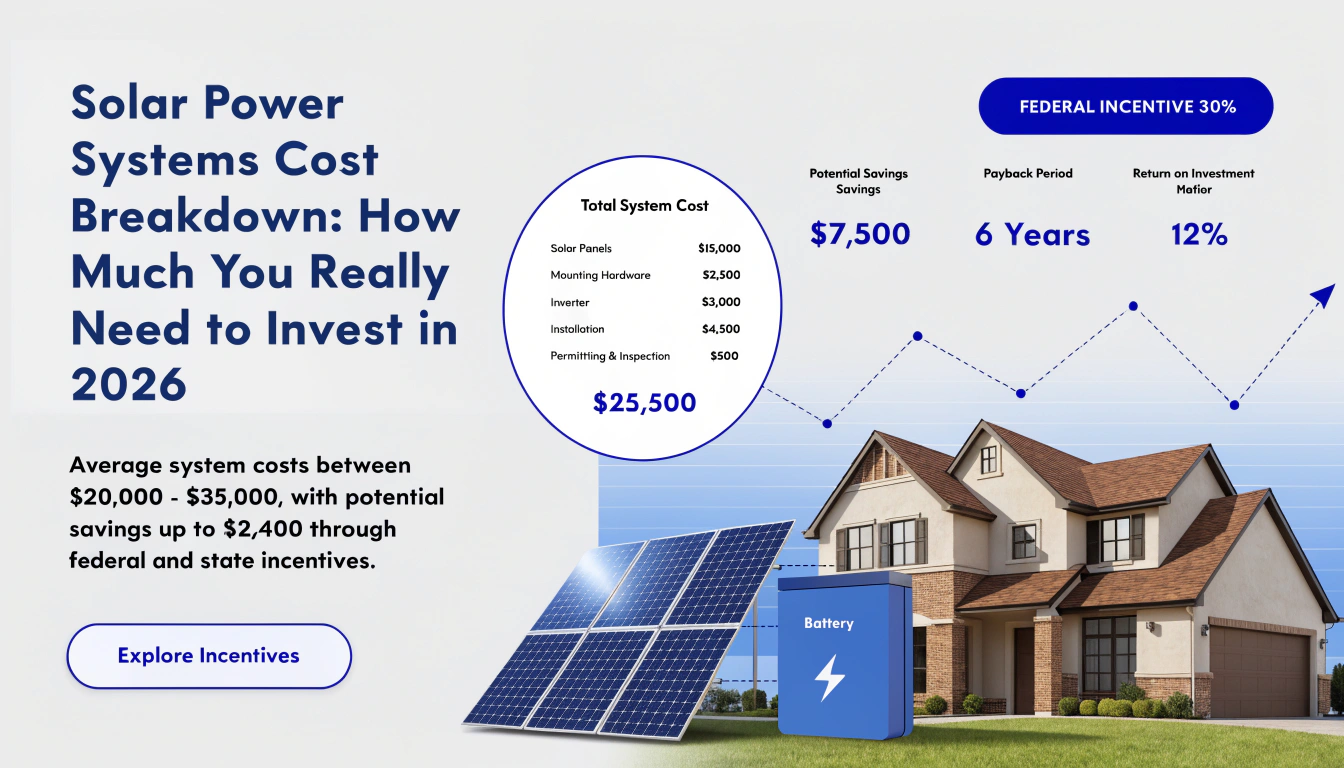
Understanding the cost is not just about the price of panels. A complete solar energy system includes multiple components like inverters, batteries, wiring, installation, and maintenance. When all of these are combined, the total investment can vary widely depending on your home size, energy usage, and system quality.
This guide breaks down everything in simple terms so you can clearly understand where your money goes and what kind of solar energy savings you can expect in return.
What Makes Up the Cost of a Solar Power System?
A solar system is not a single product. It is a full setup of multiple parts working together to generate electricity through solar electricity generation.
Here are the main cost components:
1. Solar Panels
These are the most visible part of the system. They capture sunlight and convert it into electricity using photovoltaic technology.
2. Inverter
The inverter converts DC electricity into AC power so your home appliances can use it.
3. Batteries (Optional but Important)
A solar battery storage system stores extra energy for night use or power outages.
4. Mounting Structure
This holds solar panels on your roof safely and at the correct angle.
5. Wiring and Installation
Includes electrical connections, safety equipment, and professional installation charges.
6. Monitoring System (Smart Option)
Modern systems include apps for tracking home energy efficiency and usage.
Average Cost of Solar Power Systems in 2026
The cost depends on system size and energy needs.
Small Solar System (Basic Homes)
- Suitable for lights, fans, and small appliances
- Lower installation cost
- Limited energy-efficient systems support
Medium Solar System (Family Homes)
- Supports refrigerator, fans, lights, and TV
- Balanced investment
- Better solar energy savings
Large Solar System (High Consumption Homes)
- Supports AC, fridge, washing machine, and full backup
- Higher upfront cost
- Maximum energy independence
On average, most homeowners invest based on their monthly electricity usage and roof space.
Key Factors That Affect Solar System Cost
1. System Size (Kilowatts)
The bigger your system, the higher the cost. A higher capacity means more solar powered home appliances can run smoothly.
2. Battery Storage
Adding batteries increases cost but also improves backup power and solar energy system reliability.
3. Quality of Solar Panels
High-efficiency panels cost more but produce more electricity and improve solar system efficiency.
4. Installation Complexity
Roof type, wiring distance, and structure affect labor costs.
5. Location and Sunlight Availability
Areas with more sunlight require smaller systems compared to cloudy regions.
6. Brand and Warranty
Trusted brands cost more but offer long-term durability and better clean energy solutions.
Hidden Costs You Should Know
Many people only consider installation cost, but there are additional expenses:
- Battery replacement after several years
- Maintenance and cleaning
- Inverter upgrades
- System expansion in the future
These are part of long-term ownership of a renewable energy system.
Cost vs Savings: Is Solar Worth It?
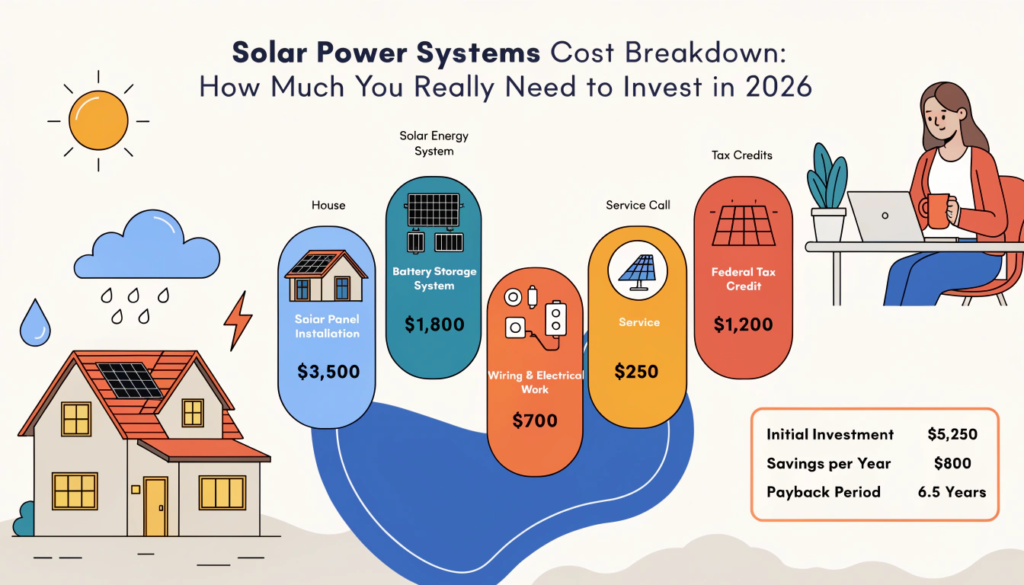
Even though the upfront cost is high, the long-term benefits are significant.
Benefits include:
- Reduced electricity bills
- Long-term solar energy savings
- Protection from rising energy prices
- Energy independence
- Environment-friendly lifestyle
Most homeowners recover their investment over time through reduced electricity costs.
Return on Investment (ROI) in Solar Systems
Solar systems are not just expenses—they are long-term investments.
Over time:
- Electricity bills decrease
- Maintenance costs stay low
- System pays for itself in savings
This makes solar one of the most reliable renewable energy solutions for homes.
Solar System Cost Comparison (Simple View)
Traditional Electricity
- Low setup cost
- High monthly bills
- No long-term asset
Solar Power System
- Higher initial cost
- Very low monthly cost
- Long-term asset with savings
This comparison clearly shows why solar is becoming more popular in 2026.
How to Reduce Solar System Cost
You can reduce your investment with smart planning:
- Start with essential solar powered home appliances
- Choose hybrid systems instead of full off-grid setups
- Use net metering where available
- Select right system size (avoid overbuying)
- Compare multiple suppliers
These steps help improve affordability without reducing efficiency.
Future Cost Trends of Solar Systems
The cost of solar systems is expected to decrease over time due to:
- Better manufacturing technology
- Increased competition
- Improved battery efficiency
- Government incentives in many regions
This makes solar electricity systems more accessible every year.
Conclusion
The cost of solar power systems in 2026 depends on many factors, but the overall picture is clear: solar is a long-term investment, not just an expense.
While the initial setup may seem high, the benefits—such as solar energy savings, reduced electricity bills, and energy independence—make it highly valuable over time.
With advancements in renewable energy systems, better batteries, and more efficient panels, solar is becoming more affordable and practical for every type of home.
In simple terms, investing in a solar system today means securing lower energy costs, better control over electricity, and a future powered by clean energy solutions.
FAQs
1. How much does a solar power system cost in 2026?
The cost depends on system size and usage. Small systems are affordable, while large systems with solar battery storage systems cost more but provide full home backup.
2. Is solar really cheaper than electricity in the long run?
Yes, because solar reduces monthly bills and provides long-term solar energy savings, making it more cost-effective over time.
3. What is included in solar installation cost?
It includes panels, inverter, batteries, wiring, installation, and monitoring systems for a complete solar energy system.
4. Do batteries increase solar system cost a lot?
Yes, batteries increase upfront cost, but they provide backup power and improve energy independence.
5. How long does it take to recover solar investment?
Most homeowners recover costs within a few years through reduced electricity bills and clean energy solutions.