
🇺🇸 Introduction
Solar power is one of the fastest-growing energy solutions in the United States. With rising utility costs and strong government incentives, more homeowners and businesses are switching to solar to save money and gain energy independence.
⚡ What is a Solar Power System?
A solar power system converts sunlight into electricity using solar panels. This electricity can power your home or business, reduce your reliance on the utility grid, and lower your monthly energy bills.
🔄 How Solar Power Works
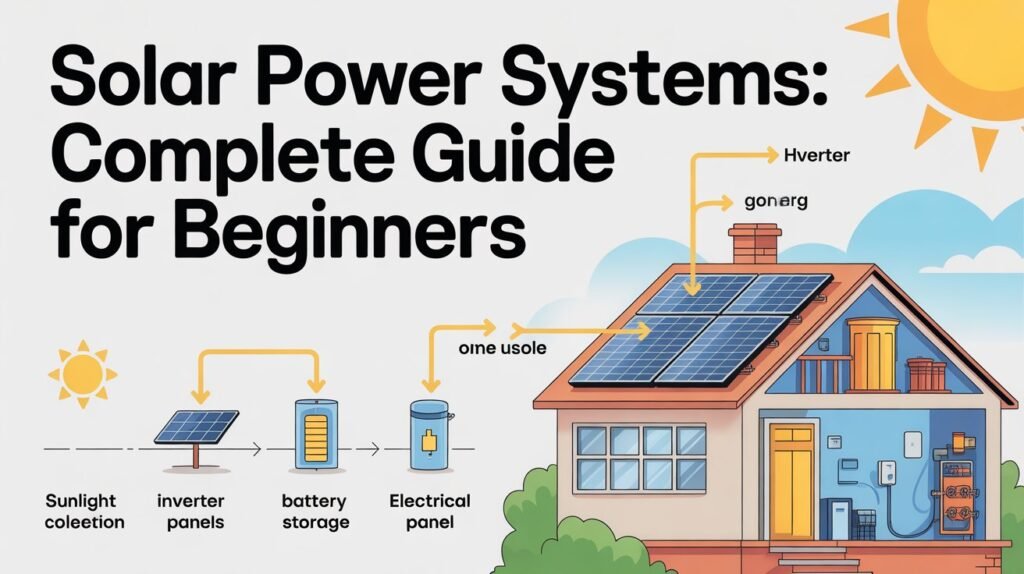
- Solar panels capture sunlight and produce DC electricity
- An inverter converts DC into AC electricity (usable power)
- Electricity runs your appliances
- Extra energy is:
- Sent to the grid (net metering), or
- Stored in batteries for later use
👉 Simple flow: Sun → Panels → Inverter → Home
🔧 Main Components
Solar Panels
Installed on rooftops or ground systems to generate electricity.
Inverter
Converts electricity into a usable form. Options include string inverters and microinverters.
Battery Storage (Optional)
Provides backup power during outages and stores excess energy.
Mounting System
Keeps panels secure and positioned for maximum sunlight.
Monitoring System
Allows you to track performance via mobile apps.
🏠 Types of Solar Systems
🔌 Grid-Tied System (Most Common in USA)
- Connected to utility grid
- Lower cost
- Eligible for net metering
🔋 Off-Grid System
- Fully independent
- Requires batteries
- Used in remote areas
🔄 Hybrid System
- Grid + battery backup
- Best for energy security
💰 Costs & Savings in the USA
- Average residential system: $10,000–$30,000 (before incentives)
- Businesses: higher upfront, larger long-term savings
Federal Incentive
The Federal Investment Tax Credit (ITC) allows you to deduct a portion of installation costs from federal taxes.
Net Metering
Many states allow you to earn credits for excess electricity sent back to the grid.
📈 Return on Investment
- Payback period: 6–10 years
- System lifespan: 25+ years
- Long-term savings: significant reduction in electricity costs
🏢 Solar for Businesses
Businesses can benefit from:
- Reduced operating costs
- Tax advantages and depreciation
- Improved sustainability branding
- Predictable energy expenses
⚠️ What to Consider Before Installing
- Roof condition and sun exposure
- Local state policies and incentives
- Utility company rules
- Installer certifications
- Financing options (cash, loan, lease, PPA)
🔌 Popular Solar Brands in the USA
- Tesla – solar panels and battery solutions
- SunPower – high-efficiency systems
- Enphase Energy – advanced microinverters
🧰 Maintenance Tips
- Keep panels free of dirt and debris
- Monitor system performance regularly
- Trim nearby trees to avoid shading
- Schedule occasional inspections
❌ Common Beginner Mistakes
- Choosing the wrong system size
- Ignoring local incentives
- Hiring unqualified installers
- Skipping battery backup when needed
✅ Final Thoughts
Solar power systems are a smart long-term investment in the USA. With strong incentives, long lifespan, and rising energy costs, going solar can provide both financial and environmental benefits.