
Introduction
In 2026, energy is no longer just about “electricity supply”—it is about intelligence, automation, and control. That’s where smart solar power systems for modern homes are changing everything. These systems are not just regular solar setups; they are advanced, connected, and optimized solutions that manage energy efficiently using solar electricity generation, AI-based monitoring, and smart devices.
Modern homeowners are now shifting toward renewable energy solutions that not only reduce electricity bills but also provide real-time control over energy usage. Smart solar systems combine solar panels, batteries, inverters, and smart software to create a fully automated solar energy system that works with maximum efficiency and minimum waste.This guide explains everything in detail—features, technology, benefits, costs, and future trends—in a simple human-friendly way.
What Are Smart Solar Power Systems?
Smart solar power systems are advanced versions of traditional solar setups that use digital technology to monitor and control energy usage.
They are part of modern solar powered home appliances ecosystems and use software, sensors, and AI to improve performance.
These systems:
- Generate electricity using solar panels
- Store energy in solar battery storage systems
- Automatically manage energy usage
- Provide real-time data on energy consumption
They are a key part of clean energy solutions and modern smart homes.
How Smart Solar Power Systems Work
The working process is simple but highly advanced:
- Solar panels capture sunlight and convert it into electricity
- Energy flows into a smart inverter
- The system decides where energy should go (home use or battery storage)
- Stored energy is managed through AI-based controllers
- Smart apps show real-time energy usage
This entire process is called intelligent solar electricity generation management.
Unlike traditional systems, smart solar setups can automatically adjust energy flow based on usage patterns.
Key Features of Smart Solar Power Systems
1. AI-Based Energy Management
Smart systems use AI to analyze energy consumption and optimize usage. This improves home energy efficiency and reduces waste.
2. Real-Time Monitoring
Users can track electricity production and usage through mobile apps. This makes energy control simple and transparent.
3. Smart Battery Storage
Advanced solar battery storage systems store excess energy and release it when needed, especially at night or during outages.
4. Automatic Load Management
The system automatically prioritizes essential appliances during low energy production.
5. Grid Interaction (Hybrid Systems)
Smart systems can work with the grid, exporting extra electricity and reducing bills through net metering.
6. High Energy Efficiency
Modern systems use high-efficiency solar panels to maximize energy output even in low sunlight conditions.
Technology Behind Smart Solar Systems
Smart solar systems are powered by multiple advanced technologies:
1. IoT (Internet of Things)
IoT connects all devices in the system, allowing real-time communication and monitoring.
2. Artificial Intelligence (AI)
AI predicts energy usage patterns and improves solar system efficiency automatically.
3. Smart Inverters
These convert DC to AC power and manage energy flow intelligently.
4. Energy Monitoring Software
Apps provide insights into electricity usage, savings, and system performance.
5. Advanced Battery Technology
Lithium-ion batteries improve storage capacity and lifespan in renewable energy systems.
Benefits of Smart Solar Power Systems
1. Lower Electricity Bills
Smart systems optimize energy usage, leading to significant solar energy savings.
2. Energy Independence
Homeowners can generate and control their own electricity without relying fully on the grid.
3. Better Efficiency
AI-based systems reduce energy waste and improve overall performance.
4. Eco-Friendly Living
They support eco-friendly energy solutions by reducing carbon emissions.
5. Backup During Power Cuts
With solar battery storage systems, homes stay powered even during outages.
6. Smart Control
Users can control appliances and monitor usage from mobile apps.
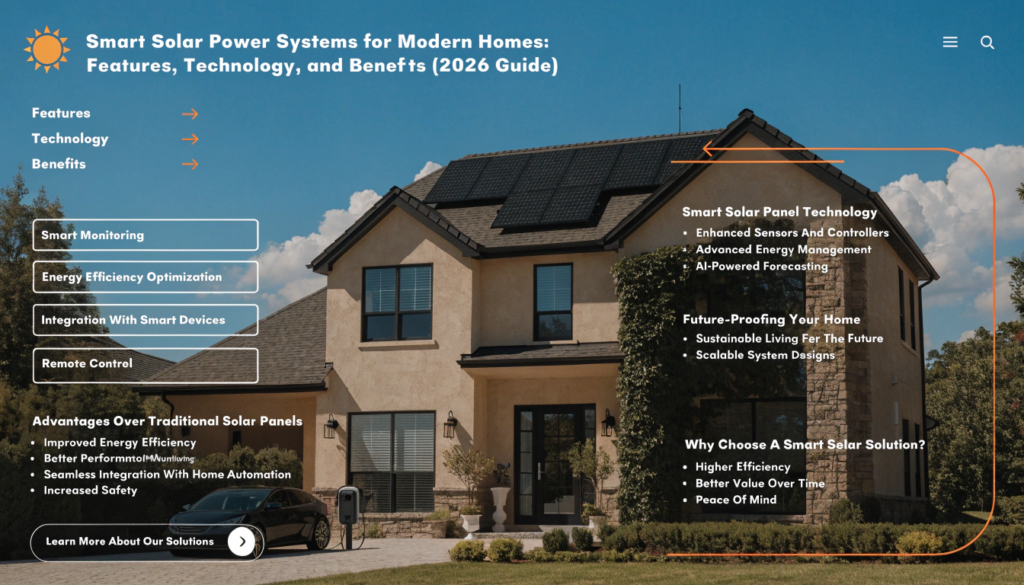
Smart Solar Systems vs Traditional Solar Systems
Traditional Solar Systems
- Basic energy generation
- Limited monitoring
- Manual control
- No AI optimization
Smart Solar Systems
- AI-powered management
- Real-time monitoring
- Automatic energy distribution
- Higher efficiency
Smart systems clearly outperform traditional setups in terms of solar energy performance and control.
Cost of Smart Solar Power Systems (2026)
The cost depends on system size and technology:
- Small systems: affordable entry-level setups
- Medium systems: balanced home solutions
- Large smart systems: premium full-home setups
Although the initial cost is higher, long-term solar energy savings and reduced electricity bills make it a strong investment.
Challenges of Smart Solar Systems
- High initial investment
- Requires technical setup
- Needs internet for full smart features
- Battery replacement after years
However, these challenges are balanced by long-term efficiency and savings.
Future of Smart Solar Power Systems
The future of solar energy is highly intelligent:
- Fully automated smart solar appliances
- AI-driven home energy ecosystems
- Improved battery storage systems
- Integration with smart cities
- Predictive energy management
These innovations are shaping the next generation of clean energy solutions.
Conclusion
Smart solar power systems represent the future of home energy. Unlike traditional setups, they combine solar energy with artificial intelligence and automation to create a fully optimized and efficient power solution.
By using solar powered home appliances, homeowners can enjoy better control, lower bills, and higher efficiency. These systems not only improve solar energy savings but also support a cleaner and more sustainable lifestyle.
With advancements in renewable energy systems, solar battery storage systems, and smart technology, these systems are becoming more powerful and accessible every year.
In simple terms, smart solar power systems are not just about generating electricity—they are about building intelligent, efficient, and future-ready homes powered by clean energy solutions.
FAQs
1. What is a smart solar power system?
A smart solar power system is an advanced solar setup that uses AI and IoT to manage energy automatically. It improves solar electricity generation and optimizes home energy usage.
2. Are smart solar systems better than normal solar systems?
Yes, they are more efficient because they use automation, real-time monitoring, and energy-efficient systems to reduce waste and improve performance.
3. Do smart solar systems work at night?
Yes, if they include solar battery storage systems, they store energy during the day and supply power at night.
4. Can I control smart solar systems from my phone?
Yes, most systems come with mobile apps that allow real-time monitoring and control of your solar energy system.
5. Are smart solar systems expensive?
They are more expensive initially, but they provide long-term solar energy savings, making them cost-effective over time.